
SEO & Content

Learn why Generative Engine Optimization is replacing traditional SEO. Get direct steps to capture AI traffic and improve your B2B conversion rates.
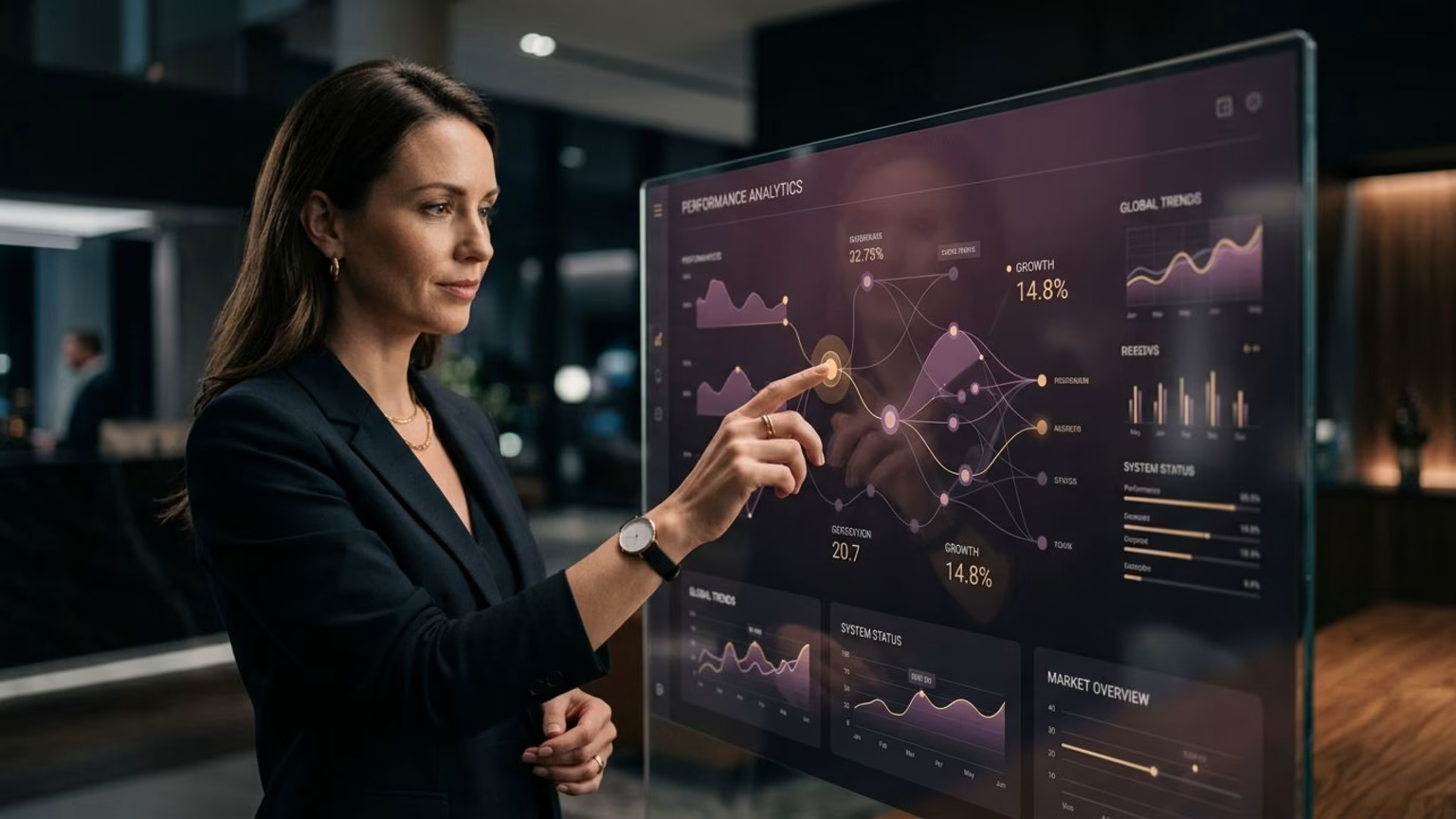
You log into your analytics dashboard on a quiet Tuesday morning. The traffic graph shows a flat line for the third straight month. Your competitors are quietly capturing your customers directly inside AI chat boxes without ever getting a traditional website click.
Omni Marketing recently released an urgent 2026 Traffic Report outlining a permanent shift from traditional SEO to Generative Engine Optimization. Search engines now use AI to generate direct answers for users instantly. Businesses must adapt their content to feed these AI engines directly or face massive visibility drops.
Standard search traffic is facing a severe and rapid decline. Gartner predicts a 25 percent drop in traditional search volume in 2026 as users flock to AI answer engines. US organic visits are already down roughly 2.5 percent year over year based on Graphite data.
Users get their questions answered instantly without clicking blue links. Google AI Overviews currently reach 2 billion monthly users globally. ChatGPT serves 900 million weekly users, and Perplexity processes hundreds of millions of monthly queries.
This creates a massive invisible loss for your business. Digital Bloom notes your standard dashboard can look perfectly stable. The reality is that actual buyer demand routes entirely through new AI answer surfaces.
Retail sites are feeling this aggressive shift right now. AI driven traffic to US retail sites surged 4,700 percent year over year according to Adobe Analytics. Ecommerce brands face an urgent need for agent optimization to capture this bypassing traffic.
Financial and retail sectors are seeing how AI is replacing traditional funnels in FinTech marketing and beyond. Your SEO dashboard can hide this shift entirely. You must adapt immediately.
The shift is already transforming the standard B2B marketing environment. Job postings for senior marketing managers increasingly demand direct GEO expertise alongside traditional paid media skills. Companies require internal talent that understands how to format data for AI agents.
The speed of this transition leaves little room for hesitation. AI Overviews doubled their query coverage from 6.49 percent to 13.14 percent in recent months. Companies that fail to adapt their content will simply disappear from search entirely.
The financial impact of AI visibility extends far beyond basic website clicks. The Omni Marketing report proves AI search visitors convert 4.4 times better than standard organic visitors in B2B environments. This makes generative optimization a massive revenue multiplier for service businesses.
Brands cited within Google AI Overviews experience massive traffic lifts. Seer Interactive analyzed 3,119 search terms across 42 organizations. They found that appearing in AI Overviews drives roughly 35 percent more organic clicks.
These cited brands saw a 91 percent increase in paid clicks. Smart marketing agencies are already capitalizing on this data. UK agency Digital Landscope blends traditional search tactics with Answer Engine Optimization for Google AI Mode.
This hybrid strategy generated average traffic increases of 400 percent for their clients. Businesses need robust SEO & content that grow search traffic alongside these new AI strategies. Blending both approaches creates highly measurable growth.
The difference in traffic quality is staggering. AI engines pre-qualify users by answering their basic questions before they ever reach your site. The users who finally click through to your domain carry extremely high purchase intent.
This shift rewards companies that provide dense factual answers. Broad marketing fluff fails completely in this new environment. Your content must deliver immediate value to survive the transition.
The math becomes simple when you map out these conversion numbers. A business capturing 1,000 AI search visitors generates the same revenue as a competitor attracting 4,400 standard organic clicks. Quality completely overrides raw volume in this new search era.
You need specialized software to measure your presence across modern AI chat platforms. Platforms like OmniSEO now offer dedicated AI visibility tools. These tracking platforms monitor your brand recommendations directly inside ChatGPT and Perplexity.
This tracking gives you a measurable way to quantify AI citations before they turn into website visits. You can see exactly which AI answers feature your business products. This data proves whether your new optimization strategy is actually working.
Your primary metric for this new era is the zero-click search rate. Data shows roughly 60 percent of Google searches end without a user clicking any link. This metric rises to nearly 77 percent on mobile devices.
You must monitor your AI citation rate on chat platforms to offset these lost clicks. If your zero-click rate rises but your inbound leads remain steady, your AI visibility strategy is succeeding. You need to focus on revenue dashboards showing AI conversions rather than vanity metrics.
Do not let stable search dashboards trick your marketing team. Demand clear attribution for every lead that enters your pipeline. If organic traffic drops but high intent leads grow, your new strategy is working perfectly.
Many companies assume they can dominate AI answers simply by publishing heavily on their own domains. This approach completely ignores the massive citation bias built into modern language models. AI systems fundamentally prefer to cite independent publishers over corporate websites.
Over-reliance on your own website creates invisible traffic losses that never appear in standard analytics. See our monthly plans to automate this complex external growth process. We build websites that get you more leads.
Stop relying on outdated dashboards that hide your true market visibility. Adapt your content strategy to answer the exact questions AI engines ask. Build authority where it matters, and watch your conversion rates compound.



No guesswork, no back-and-forth. Just one team managing your website, content, and social. Built to bring in traffic and results.


